
Table of Contents
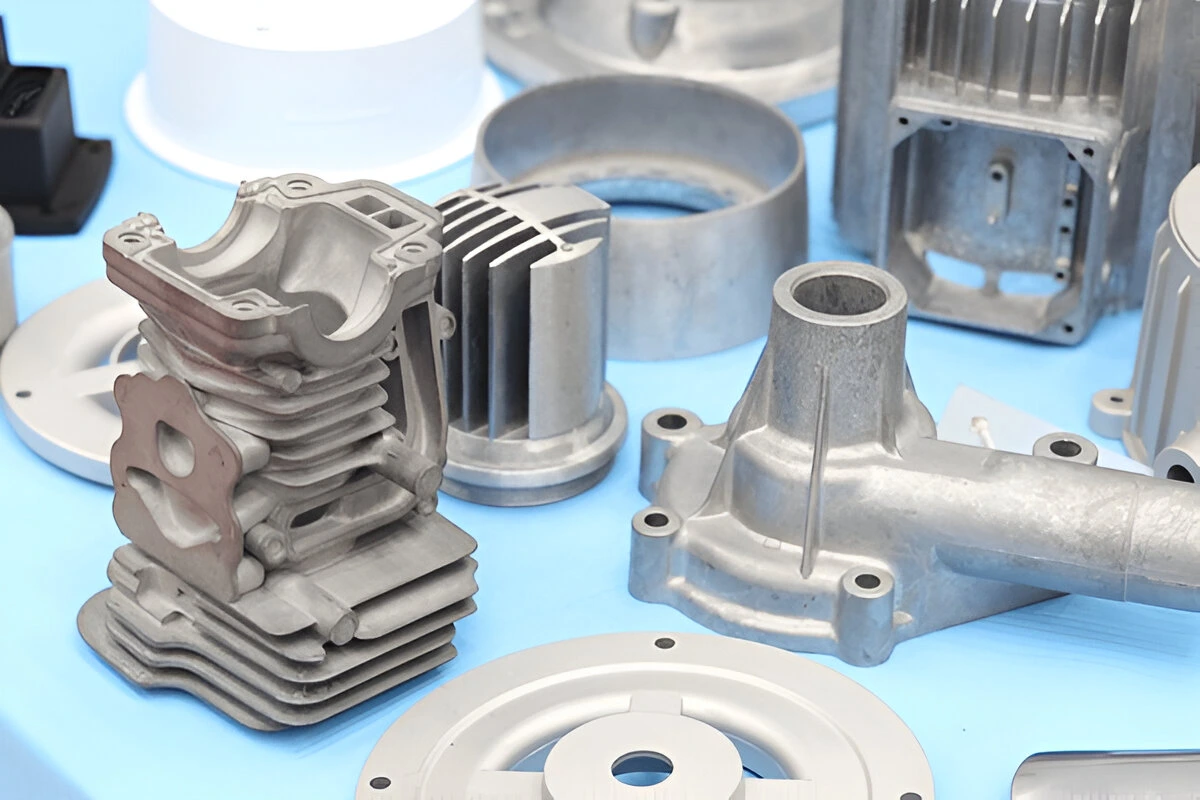
What is Pressure Die Casting?
Pressure die casting is a manufacturing process where molten metal is forced under high pressure into a hardened steel mould (called a die) to form a solid metal part. This process allows rapid, high-volume production of complex parts with tight tolerances, smooth surfaces and consistent quality — making it one of the most widely used precision metal casting methods in the world.
Key Features of Pressure Die Casting
- High-volume production capability — cycle times as short as a few seconds per part enable mass production efficiency unmatched by other casting methods
- Excellent dimensional accuracy and tight tolerances — high injection pressure ensures complete cavity filling and consistent part dimensions across millions of parts
- Smooth surface finishes — parts are often ready for direct coating, plating or anodising with minimal post-processing
- Ideal for thin-walled, intricate parts — high pressure fills thin sections that gravity cannot reach reliably
- Supports lightweight metals — aluminium, magnesium, zinc and copper alloys are all used, with aluminium dominating industrial applications
1How Does Pressure Die Casting Work?
Molten metal (commonly aluminium, zinc or magnesium alloys) is injected into the die using a hydraulic plunger at high pressure. The pressure ensures the metal completely fills even the smallest mould details, producing excellent dimensional accuracy and smooth surface finishes. Once solidified, ejector pins push out the finished casting, which then undergoes trimming to remove gates and runners.
Mould Preparation
The two die halves (fixed and moving) are cleaned and sprayed with a release agent or lubricant. This prevents the molten metal from sticking to the die surface, ensures smooth part ejection and extends die life. Die temperature is brought to operating range.
Injection
The molten metal is injected into the closed die cavity at high pressure — typically 1,000 to 30,000 PSI. This pressure ensures complete cavity filling even in parts with thin walls or complex geometries, often within milliseconds of shot.
Solidification
Inside the die, molten metal cools and solidifies rapidly — forming a casting that precisely matches the cavity. Built-in cooling channels regulate die temperature and ensure consistent mechanical properties and solidification rate across every cycle.
Ejection
After solidification, the die opens and ejector pins push the casting out cleanly. The part is allowed to cool further before being handled. Proper ejector pin placement prevents part deformation during ejection.
Trimming and Finishing
Excess metal from the gating system, runners and vents is trimmed. The casting may then be deburred, CNC machined, shot blasted, anodised or powder coated depending on final application requirements.
Cycle Repetition
The die is re-sprayed with release agent, closed and the cycle repeats. Short cycle times — often just seconds — make pressure die casting highly efficient and cost-effective for large-scale production runs.
2Types of Pressure Die Casting
The two primary methods are High-Pressure Die Casting (HPDC) and Low-Pressure Die Casting (LPDC). Other important techniques include gravity die casting, vacuum die casting, squeeze casting and semi-solid die casting.
Primary Types
High-Pressure Die Casting
Molten metal is injected into a hardened steel die at high speed and pressure — producing parts with tight tolerances, smooth surfaces and excellent dimensional accuracy. Best for high-volume production of small to medium-sized parts: automotive housings, gearboxes, electronic casings.
Hot-chamber variant: Injection system sits in the molten metal reservoir — for low-melting-point alloys (zinc, tin, lead) with very fast cycles.
Cold-chamber variant: Metal ladled into a separate shot chamber — for aluminium and magnesium requiring higher temperatures.
Low-Pressure Die Casting
Molten metal is pushed gently upward into the die cavity from a sealed furnace using low gas pressure (0.2–1 MPa). Slow, controlled fill creates dense, strong castings with few defects and excellent internal soundness.
Best for thin-walled, large components requiring high strength — automotive wheels, engine parts and aerospace housings where structural integrity is paramount.
Other Die Casting Methods
Gravity Die Casting
Molten metal flows into the die by gravity — no applied pressure. Produces strong, durable parts with good surface finish and lower tooling cost than HPDC. Best for medium-volume production of thicker-walled parts.
Vacuum Die Casting
A vacuum removes air from the die cavity before injection. This dramatically reduces porosity and improves mechanical strength — critical for structural and pressure-tight parts that cannot tolerate internal voids.
Squeeze Casting
A hybrid of casting and forging. After pouring, a hydraulic plunger presses the molten metal into the die under very high pressure — removing trapped gas and improving density. Produces near-forging mechanical properties.
Semi-Solid Die Casting
The metal is cooled to a semi-solid slurry before injection. Produces fine-grained, low-porosity castings with excellent strength and precision — particularly suited to complex structural aerospace and automotive components.
3Key Factors in Mold Design
A well-designed mould improves part quality, cycle time and tool life — while reducing defects and production costs. Key factors affecting die casting mould design include part geometry, casting material, and the gating, cooling, venting and ejection systems.
Part Geometry and Complexity
Shape, size and design control how the mould is built. Complex shapes require slides, cores and undercuts to form detailed features — each adding tooling cost and cycle time.
Wall Thickness and Draft Angles
Uniform wall thickness ensures even cooling and prevents warping or shrinkage. Draft angles (typically 0.5–3°) on all surfaces parallel to die opening allow clean ejection without marking.
Fillets and Radii
Rounded fillets at all internal corners reduce stress concentration — improving durability of both the mould and the casting. Sharp corners are one of the most common causes of premature die cracking.
Holes, Slots and Windows
Placement of holes and openings affects metal flow through the cavity. Poor positioning causes air traps, cold shuts or incomplete filling — all addressable through mould flow simulation.
Casting Alloy Properties
Aluminium, zinc and magnesium have different melting points, fluidity and shrinkage rates. The mould design must account for material-specific behaviour including solidification shrinkage (typically 0.5–0.7% for aluminium).
Mould Material and Durability
H13 tool steel is the standard for HPDC dies — withstanding repeated thermal cycling and high injection pressures. Proper heat treatment determines die life, which can range from tens of thousands to over 100,000 shots.
Gating, Cooling and Venting Systems
The gating system directs metal into the cavity. Cooling channels control temperature for consistent solidification. Venting lets trapped air escape — critical for eliminating porosity in HPDC parts.
Ejection System
Number and position of ejector pins must be designed to release the part cleanly without deformation. Ejector marks on non-cosmetic surfaces are acceptable; on visible surfaces they require careful pin placement.
Production Volume and Machine Fit
High-volume runs need stronger mould materials and faster cooling. The mould must match the die casting machine's clamping force, shot size and platen dimensions — calculated from projected casting area and injection pressure.
4Impact of Wall Thickness in Pressure Die Casting
Wall thickness is a critical design parameter. Uneven or non-uniform thickness causes porosity, incomplete mould filling and poor surface finish — because metal flow and cooling rates become inconsistent, affecting the mechanical properties and strength of the finished casting.
Uniform Wall Thickness
- Ensures even cooling and solidification across the part
- Reduces internal stresses and defect formation
- Produces better mechanical strength and surface finish
Non-Uniform Wall Thickness
- "Freezing out" — thin sections cool too fast, preventing complete fill
- Thicker sections develop shrinkage pores from slower cooling
- Stress concentration points — potential part failure in service
Effects of Thin Walls
- Cool and solidify quickly — complete filling is difficult
- Require precise control of plunger speed and process parameters
- Risk of cold shuts or sink marks if parameters drift
Effects of Thick Walls
- Take longer to cool — shrinkage porosity can form at the centre
- Create hot spots or slow-cooling regions in the die
- Often produce coarser microstructure with lower mechanical properties
5Pressure Die Casting Specifications
| Specification | Value / Range |
|---|---|
| Machine tonnage | 40 to 4,000+ tons (clamping force) |
| Injection pressure — Al/Mg alloys | 3,000–10,000 PSI |
| Injection pressure — Cu alloys | 6,000–15,000 PSI |
| Casting pressure | 100–1,000 MPa (14,500–145,000 PSI) |
| Casting weight | Few grams to 100+ kg |
| Wall thickness — minimum (aluminium) | 2.5 mm |
| Wall thickness — maximum | 8–10 mm (beyond this, LPDC or gravity preferred) |
| Surface roughness | Ra 6.3 μm (as-cast) |
| Linear tolerance | CT6 (ISO 8062) for aluminium; tighter for critical features |
| Maximum part dimension | Up to 650 mm feasible; larger possible with large machines |
| Draft angles | 0.5–3° (taller walls may use smaller angles) |
| Part quality requirements | Free of blowholes, shrinkage and cold shuts; no patching or welding |
| Die life (HPDC) | Tens of thousands to 100,000+ cycles depending on alloy and conditions |
6Materials Used in Pressure Die Casting
Materials are selected based on strength, weight, corrosion resistance and cost. Aluminium, zinc and magnesium alloys are the most common — but copper, brass, lead and tin can also be used for specific applications.
Aluminium Alloys
The most widely used die casting material — lightweight, strong and corrosion-resistant. Excellent strength-to-weight ratio, easy to machine and durable. Common alloys include A380, A383 and A390.
Zinc Alloys
Easy to cast with low melting point — ideal for hot-chamber die casting. Smooth surface finish, excellent dimensional accuracy and high yield. Zamak 3 and Zamak 5 are the most common grades. Perfect for small intricate hardware and consumer electronics parts.
Magnesium Alloys
The lightest structural metal used in die casting — good strength with significant weight savings over aluminium. AZ91D and AM60 are common. Used in aerospace, portable electronics and automotive parts where mass reduction is critical.
Copper and Brass Alloys
High hardness, excellent wear resistance and superior electrical and thermal conductivity. Used for electrical connectors, bearings, mechanical parts and industrial components requiring both strength and conductivity.
Lead and Tin Alloys
Used for low-melting-point components in specialty applications — radiation shielding, battery terminals and plumbing fittings. Hot-chamber casting with very fast cycles. Increasingly replaced by safer alternatives in consumer applications.
Ferrous Metals (Rare)
Stainless and carbon steel are rarely used in die casting due to very high melting temperatures that severely limit die life. Semi-solid and squeeze casting variants allow some ferrous alloys — used only in highly specialised applications.
7Advantages of Pressure Die Casting
High Production Rates
High-pressure injection allows very fast cycle times — often seconds per part. Enables efficient mass production of identical components with consistent quality across every cycle.
Complex Part Design
Can create intricate shapes, thin walls, undercuts and embedded features in a single shot. Designs that are impossible or prohibitively expensive with other methods become achievable.
Excellent Dimensional Accuracy
High pressure ensures complete mould filling. Tighter tolerances reduce or eliminate post-machining — significantly cutting total production cost for precision parts.
Superior Surface Finish
Rapid solidification under pressure produces smooth, uniform surfaces — often Ra 6.3 μm or better as-cast. Parts can be coated, plated or anodised with minimal preparation.
High Strength and Durability
Rapid cooling creates a dense, fine-grain microstructure with good mechanical properties — stronger and more consistent than many alternative casting processes at comparable alloy composition.
Cost-Effective at Scale
Fast cycle times and low per-part labour cost make HPDC economical for high-volume production — despite higher initial tooling investment versus sand or gravity casting.
Automation-Friendly
The process integrates seamlessly with robotic cells for part extraction, trimming, inspection and handling — reducing labour cost and improving consistency across millions of parts.
Reduced Material Waste
High process efficiency and fully recyclable gate/runner scrap — returned to the furnace in the same shift — minimise raw material consumption and environmental impact.
Insert Casting Capability
Inserts like threaded fasteners, bushings and pins can be included during casting — reducing assembly steps, improving positional accuracy and enhancing final part functionality.
8Applications of Pressure Die Casting
Automotive
Engine blocks, cylinder heads, transmission cases, structural brackets, engine mounts, EV battery housings, electric motor casings, wheels, gears and suspension components. Automotive is the largest single market for pressure die casting globally.
Aerospace
Structural components where strength-to-weight ratio is critical, engine parts for aircraft and spacecraft. Aluminium and magnesium HPDC parts reduce weight while maintaining structural integrity under demanding operating conditions.
Electronics and Consumer Goods
Smartphone and laptop housings, heat sinks, connectors, lighting fixtures, appliance components and dresser hardware. Aluminium die casting manages heat dissipation in electronics while providing rigid, lightweight enclosures with precise geometry.
Medical Devices
Surgical tools, diagnostic equipment enclosures and precise instrument housings that require high dimensional accuracy, smooth surfaces and the ability to withstand sterilisation processes.
Energy and Defence
Parts for renewable energy systems (solar mounting hardware, wind turbine components), weapon components, armour inserts and communication equipment housings requiring precision, lightweight design and robust mechanical performance.
9Common Defects in Pressure Die Casting
Understanding common die casting problems helps improve mould design, process parameters and material selection. Most defects are preventable through proper process control and upfront design review.
Porosity
Caused by improper venting, low injection pressure, incorrect metal temperature or turbulent fill. Prevention: proper venting design, vacuum die casting, optimised injection speed profiles and melt degassing.
Cold Shuts
Caused by low metal or die temperature, poor mould design or slow-moving molten metal. Prevention: optimise gating design, increase metal temperature, ensure die is at operating temperature before production.
Misruns
Metal solidifies before completing fill. Caused by low temperature, low injection pressure or inefficient gating. Prevention: review gating system, increase metal temperature and injection speed.
Flash
Caused by poor die design, incorrect metal temperature or improper clamping force. Prevention: ensure correct clamping force calculation, well-maintained parting surfaces and proper die alignment.
Cracks
Cold cracks (non-oxidised) or hot cracks (oxidised at grain boundaries). Caused by uneven cooling, non-uniform wall thickness or excessive alloying elements. Prevention: uniform wall design and controlled cooling rates.
Soldering
Caused by high die temperature or insufficient/improperly applied release agent. Prevention: regular die spraying schedule, proper lubricant selection for the alloy, and die surface maintenance.
Blisters
Trapped gas inside the part expands during or after ejection — particularly after heat treatment. Caused by high gas content in the melt or overheating after casting. Prevention: melt degassing and vacuum die casting.
10Pressure Die Casting Machines and Tools
Types of Machines
Cold-Chamber Die Casting Machines
Molten metal is ladled into a cold chamber and then injected into the die. Best for metals with high melting points — aluminium, copper and brass. Reduces oxidation risk and allows precise injection control. The most common machine type for aluminium HPDC.
Hot-Chamber Die Casting Machines
The metal is kept molten in a chamber that is part of the injection system — then pushed directly into the mould by a plunger. Best for low-melting-point metals — zinc, magnesium and lead. Very fast cycle times; suitable for very high-volume small-part production.
Hydraulic Machines
Use hydraulic pressure for precise injection and clamping control. Ideal for large, heavy parts requiring high clamping tonnage and consistent injection profile. Most industrial HPDC machines in the 200–4000+ ton range are hydraulic.
Mechanical Machines
Use cams and toggles for injection and clamping. Faster cycle capability than hydraulic at equivalent tonnage, but less flexible for part size variation. More common in older equipment and some zinc die casting applications.
Essential Die Casting Tools
- Die (mould) tools: Made of H13 tool steel to withstand repeated high-temperature and high-pressure cycling. Can include slides, cores and ejector pins to create complex shapes. Proper mould design prevents porosity, cold shuts and misruns
- Clamping system: Holds die halves together under the injection pressure. Clamping force must exceed the force generated by injection pressure acting on the projected casting area
- Injection system (plunger/piston): Pushes molten metal into the die at precisely controlled speed and pressure profiles — critical for fill quality and defect prevention
- Ejection system: Removes solidified parts cleanly using ejector pins, sleeves and knock-out mechanisms without deformation
- Cooling and venting tools: Internal cooling channels maintain uniform die temperature and reduce cycle time. Venting channels allow trapped gases to escape — essential for low-porosity castings
- Die maintenance kits: Cleaning, polishing and repair tools to maintain cavity surface quality and extend die life
- Temperature control units: Maintain optimal metal and die temperature throughout production for consistent metallurgical properties
- Lubricants and release agents: Ensure smooth part ejection and extend die life — selection depends on alloy, die temperature and surface finish requirements
11Pressure Die Casting vs. Other Casting Methods
| Feature | Pressure Die Casting | Sand Casting | Investment Casting | Permanent Mould |
|---|---|---|---|---|
| Process | Molten metal injected into steel die under high pressure | Poured into sand moulds | Poured into ceramic moulds from wax patterns | Poured into reusable metal moulds by gravity |
| Materials | Al, Zn, Mg, Cu | Most metals inc. ferrous | Steel, Al, Cu and more | Al, Mg, Cu alloys |
| Production volume | Very high | Low to medium | Low | Medium to high |
| Dimensional accuracy | Excellent — tight tolerances | Moderate — requires machining | Excellent | Good — moderate tolerances |
| Surface finish | Very smooth — Ra 6.3 μm | Rough — sand texture | Very smooth | Smooth, but not as fine |
| Part complexity | High — thin walls, intricate shapes | Moderate | Very high — small intricate parts | Moderate |
| Cycle time | Very fast — seconds per part | Slow — hours per part | Slow — hours per part | Minutes per part |
| Tooling cost | High tooling; low per-part cost at volume | Low tooling; high labour | High tooling and labour | Moderate tooling; lower labour |
| Typical defects | Porosity, cold shuts, misruns | Shrinkage, sand inclusions | Shrinkage, inclusions, warping | Shrinkage, misruns, porosity |
12The Future of Pressure Die Casting
Digitalization and Smart Factories
IoT-connected machines monitor production in real time. AI-powered toolpath optimisation and predictive maintenance reduce downtime and scrap. Digital twins simulate casting processes before production — eliminating guesswork and costly trial shots.
Eco-Friendly Manufacturing
Recycled aluminium uses 95% less energy than primary smelting. Aluminium can be recycled infinitely without property loss. Optimised process control and digital tools reduce scrap rates and material waste throughout the production cycle.
Advanced Alloys and Lightweighting
New aluminium and magnesium alloys deliver higher strength-to-weight ratios — critical for EV battery housings, electric motor casings and aerospace structural components. Modern alloys enable complex thin-walled geometries previously impossible.
3D Printing and Hybrid Manufacturing
3D-printed sand moulds and prototype dies enable rapid design validation before hard tooling is committed. Hybrid manufacturing combines die casting with CNC machining and surface coating in integrated production cells — reducing lead time and total cost.
Conclusion
At Audhe Industries, we specialise in pressure die casting — delivering high-quality, precision-engineered metal parts for automotive, aerospace, electronics and industrial applications. Using advanced alloys, smart manufacturing techniques and Industry 4.0 practices, we ensure efficient, sustainable and accurate production.
Our team focuses on complex, lightweight and durable components — minimising waste while maintaining strict quality standards. With innovation, expertise and a customer-first approach, Audhe Industries is your trusted partner for reliable pressure die casting solutions that meet today's demands and shape the future of manufacturing.
?Frequently Asked Questions
What is Pressure Die Casting (PDC)?
What are the steps of the PDC process?
What is the difference between HPDC and LPDC casting?
| Feature | HPDC | LPDC |
|---|---|---|
| Pressure | High — 10–100 MPa | Low — 0.2–1 MPa |
| Fill speed | Very fast (milliseconds) | Slower (controlled fill) |
| Wall thickness | Thin — 2.5mm+ | Thicker sections |
| Production volume | Very high | Medium volume |
| Typical alloys | Al, Zn, Mg | Primarily aluminium |
| Best for | Small-medium intricate parts | Large structural parts, wheels |
What is PDC vs GDC?
What materials are used in HPDC casting?
- Aluminium alloys (A380, A383, A390) — lightweight, corrosion-resistant, most widely used
- Zinc alloys (Zamak 3, Zamak 5) — high precision and strength, ideal for small intricate parts
- Magnesium alloys (AZ91D, AM60) — lightest structural metal, excellent for weight-critical applications
- Copper alloys — excellent electrical conductivity and wear resistance for connectors and mechanical parts
How is HPDC tonnage calculated?
What are the most common defects and how are they prevented?
- Porosity: Prevent with proper venting, vacuum die casting and melt degassing
- Cold shuts: Increase metal and die temperature; optimise gating location
- Flash: Ensure correct clamping force; maintain die parting surface condition
- Soldering: Apply correct release agent; reduce die temperature if excessive
- Cracks: Design uniform wall thickness; avoid abrupt thickness transitions
- Misruns: Increase injection speed and metal temperature; review gating system efficiency
What is HPDC and why is it widely used?
Related Articles


