
Table of Contents
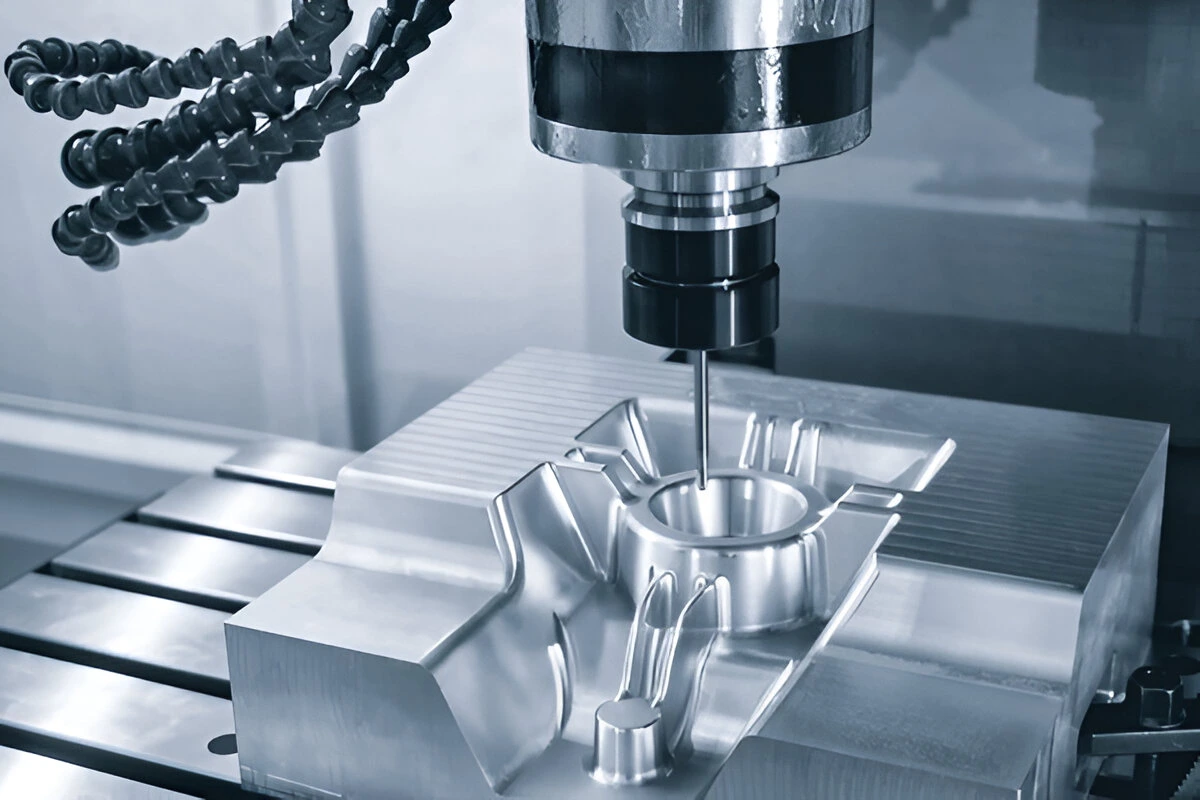
What is CNC Machining?
CNC machining (Computer Numerical Control machining) is a manufacturing process that uses computer software to control machine tools, cutting or shaping raw material into a finished part with high precision. Instead of a machinist manually guiding the cutting tool, a computer program directs the exact movement of the tool along multiple axes — producing consistent, repeatable results every time.
At Audhe Industries, CNC machining is central to producing components for the automotive, aerospace and industrial sectors, ensuring quality and efficiency on every project. Below, we break down how the process works, why it matters, and where it's used.
1How CNC Machining Works
Every CNC machining project follows a similar step-by-step workflow, from digital design to a finished, inspected part.
Design (CAD)
The process starts with a computer-aided design (CAD) model that defines the exact geometry and dimensions of the part.
CAM Software
Computer-aided manufacturing (CAM) software converts the CAD file into tool paths — the precise routes the cutting tool will follow.
Programming (G-code)
The tool paths are translated into G-code, the command language that governs the CNC machine's movements, speeds and tool changes.
Machining
The CNC machine cuts or shapes the material along multiple axes according to the programmed instructions, removing material to reveal the finished geometry.
Monitoring & Quality Control
Operators monitor the process and inspect finished parts, adjusting parameters as needed to maintain tight tolerances and consistent quality.
CNC machining is transforming how goods are produced, increasing productivity, accuracy and the range of operations that can be performed on a single part.
2Key Benefits of CNC Machining
CNC machining offers several significant advantages that make it essential across manufacturing and other industries.
Tight, Repeatable Tolerances
CNC machine tolerances can be as tight as ±0.01 inches or better, ensuring components meet exact specifications. This also makes it possible to produce the complex geometries essential in aerospace and medical parts.
Consistent Mass Production
Once a CNC program is set, a machine can produce thousands of identical copies without alteration — critical for industries that mass-produce goods while upholding quality standards and minimising defect-related waste.
Broad Material & Process Range
CNC machines handle a wide range of materials — metals, plastics and composites — and support multiple operations such as turning, drilling and engraving, making the technology suitable for diverse applications.
Faster Production, Less Labour
Automated processes speed up production rates and reduce cycle times compared with manual machining, while requiring fewer skilled operators to continuously run the machines.
3Common Industries Using CNC Machining
CNC machining is essential across a range of industries due to its accuracy and reliability. Below are the major sectors that depend on it.
Aerospace
Manufacturing complex aircraft and spacecraft components designed to withstand intensively harsh operating environments.
Automotive
Engine parts, tailored components and prototypes that ensure efficiency and safety in automobiles.
Medical
Precision surgical instruments and implants, where poor tolerances can put patients at risk — CNC accuracy is non-negotiable here.
Electronics
Circuit boards, connectors and enclosures that all require precision machining in order to function properly.
General Manufacturing
Tooling, fixtures and assembly components that enable large-scale, efficient production of finished goods.
4Specific Applications of CNC Machining by Industry
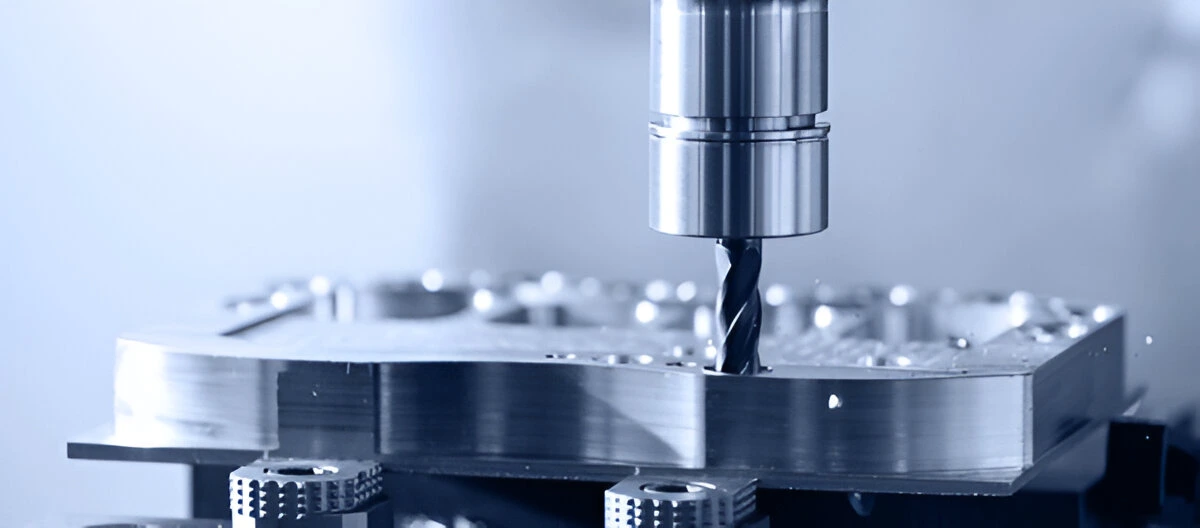
Aerospace
- Prototyping: Rapid prototyping of components such as wing brackets or fuselage sections to test designs quickly.
- Custom parts: Bespoke fasteners and brackets tailored for specific aircraft models.
- High-volume production: Manufacturing identical parts like turbine blades, where consistency and precision are essential.
- Complex geometries: Machining intricate airfoil designs that optimise aerodynamics and performance.
Automotive
- Prototyping: Prototypes of engine components or body panels to test fit and function before full production.
- Custom parts: Unique parts for custom vehicles, such as aftermarket modifications or performance enhancements.
- High-volume production: Efficient mass production of identical components like pistons and crankshafts for assembly lines.
- Complex geometries: Machining transmission housings that require precise internal features.
Medical
- Prototyping: Rapid prototyping of surgical tools or implants to validate designs before market entry.
- Custom parts: Bespoke implants tailored to individual patients' anatomy, such as orthopedic implants.
- High-volume production: Manufacturing identical surgical instruments to strict sterilisation and functionality standards.
- Complex geometries: Intricate designs in devices such as stents, where precision determines effectiveness.
Electronics
- Prototyping: Rapid prototyping of circuit boards and enclosures to test fit and functionality.
- Custom parts: Specialised connectors or housings meeting unique device specifications.
- High-volume production: Mass production of components like heat sinks and brackets for consumer electronics.
- Complex geometries: Intricate circuit board layouts that optimise space and performance.
General Manufacturing
- Prototyping: Developing tooling and fixtures for new manufacturing processes.
- Custom parts: Specialised assembly components tailored to specific production lines.
- High-volume production: Mass-producing tools and fixtures for consistent assembly operations.
- Complex geometries: Complex tooling that improves the precision of manufacturing operations.
5Types of CNC Machining Processes
CNC machining covers multiple processes depending on the application and material. Here's an overview of the core CNC machining processes.
Rotating Cutter, Multi-Axis
A rotating cutter removes material from the workpiece as it moves across multiple axes. Ideal for complex shapes like brackets, housings and molds, and widely used for prototyping.
Rotating Workpiece
The workpiece rotates while a cutting tool moves along a linear path. Commonly used for shafts, pins and fittings, and highly suited to high-volume production of identical parts.
Abrasive Wheel Finishing
A rotating abrasive wheel removes material to achieve smooth surfaces or precise dimensions — great for finishing operations and sharpening cutting tools.
Electrical Discharge Machining
Uses electrical discharge to remove material from conductive workpieces — ideal for complex dies and machining hard materials like titanium and hardened steel.
Focused Laser Beam
Cuts or engraves with a high degree of accuracy — widely used for sheet metal cutting and for engraving logos, patterns and serial numbers.
High Thermal Energy Arc
Uses an electric arc to cut electrically conductive material — often used to slice thick metal plate in industrial construction and for artistic sheet metal signage.
High-Pressure Water Jet
A high-pressure water jet, often combined with abrasives, cuts metals, ceramics, glass and even food products — ideal for intricate cuts with minimal heat-affected zones.
6Materials Used in CNC Machining
CNC machining works with a wide variety of materials, each suited to different applications, which adds to the versatility of the finished component.
Metals
- Aluminium: Lightweight, easily machined and corrosion-resistant — widely used in aerospace components, automotive parts, consumer electronics and structural frameworks.
- Steel: Highly durable and formable across grades such as carbon and stainless steel — used for automotive components, tools, industrial machines and structural parts.
- Titanium: Extremely strong with low density, high stiffness, chemical resistance and biocompatibility — prized in aerospace vehicles, medical devices and performance-built vehicles.
Plastics
- Acrylic (PMMA): Clear, lightweight and easily machined — used for display making, signage and protective barriers.
- Polycarbonate: Tough, transparent and impact-resistant — common in safety goggles, bumpers and automotive electronics.
- Nylon: Strong, flexible and wear-resistant — used for gears, bearings and other industrial applications.
- Polyethylene: Strong chemical resistance and good tensile quality — found in pipes, containers and insulating materials.
Composites
- Carbon Fiber Reinforced Polymer (CFRP): Exceptional strength-to-weight ratio — used in aircraft components, automobiles and sporting equipment like golf clubs and bicycles.
- Glass Fiber Reinforced Polymer (GFRP): Strong strength-to-weight ratio and corrosion resistance — common in the automotive industry and shipping products.
- Wood composites (MDF, plywood): Used in furniture making, cabinetry and decorative elements.
7CNC Machining vs. Traditional Machining
CNC machining offers several advantages over traditional, manually operated machining. The table below summarises the key differences.
| Factor | CNC Machining | Traditional Machining |
|---|---|---|
| Control | Computer-programmed, automated | Manually operated by a machinist |
| Precision | Very high — tight, repeatable tolerances | Dependent on operator skill |
| Repeatability | Consistent across large runs | Variable part-to-part |
| Production speed | Faster once programmed | Slower, labour-intensive |
| Complex geometry | Handles intricate designs easily | Limited by manual dexterity |
| Best for | Prototypes to high-volume production | Simple, one-off, low-volume work |
8Choosing a CNC Machining Partner
Process Capability
Confirm the shop offers the specific CNC machining processes your part needs — milling, turning, EDM, grinding or a combination.
Tolerance & Inspection
Check the achievable tolerance range and whether the shop provides full dimensional inspection reports and certificates of conformance.
Material Expertise
Look for proven experience machining your specific material — aluminium, steel, titanium, plastics or composites — since machining parameters vary significantly.
Volume Flexibility
A good CNC machining partner should support everything from rapid prototypes to high-volume production runs without compromising quality.
Conclusion
CNC machining plays a fundamental role in modern manufacturing due to its accuracy, speed and flexibility. This capability is crucial across aerospace, automotive, medical and electronics industries, since it enables the fabrication of intricate geometries with fine tolerances.
The high level of accuracy achieved by CNC machines supports rigorous quality control, while automation reduces the time and resources spent in production — enabling fast prototyping and rapid production. CNC machining also works with varied materials, including metals, plastics and composites, making it applicable across a wide range of industries.
Given the rising need for precise production, it's worth considering CNC machining services to improve your production capacity and meet your quality standards. For precision CNC machined components backed by rigorous inspection and full documentation, contact Audhe Industries.
?Frequently Asked Questions
What is CNC machining?
What types of parts can be made using CNC machining?
How does CNC machining compare to traditional machining methods?
Which industries benefit most from CNC machining?
What materials can be CNC machined?
Is CNC machining cost-effective for small production runs?
Related Articles


