
Table of Contents
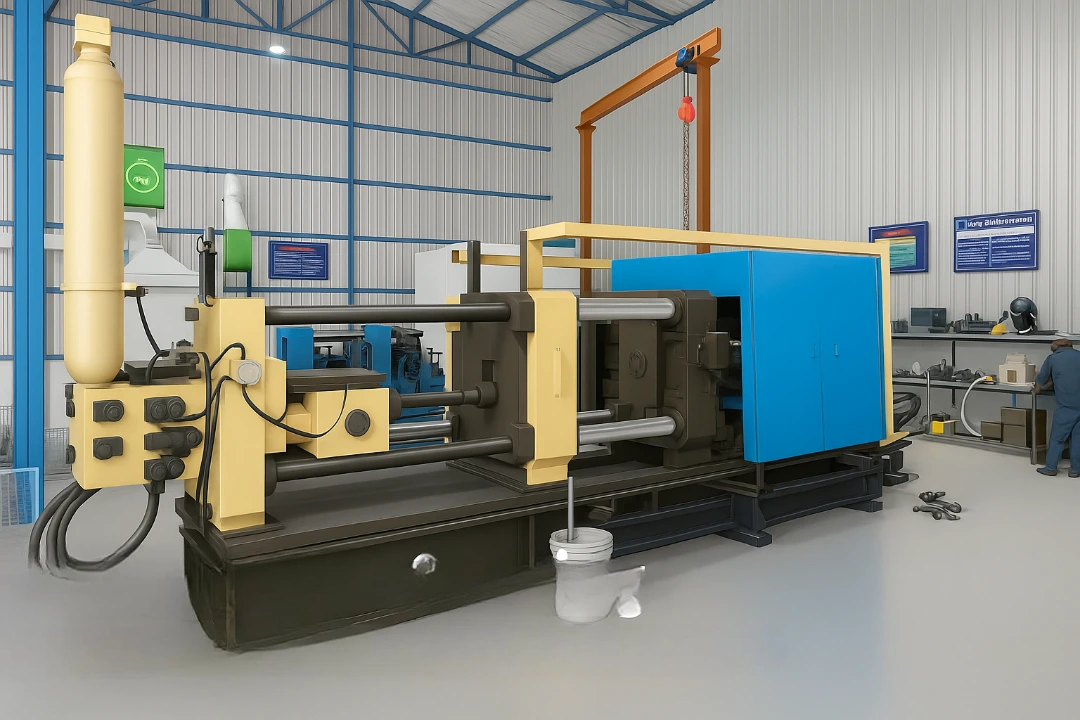
Aluminium Pressure Die Casting Machines in India
Audhe Industries delivers advanced aluminium pressure die casting machines that enable fast, precise and high-quality production of complex metal parts — ideal for industries demanding lightweight and durable solutions.
The pressure die casting process involves forcing molten aluminium into a reusable die, where it quickly solidifies under high pressure. This fast, controlled cooling creates strong and accurate parts — making aluminium pressure die casting an essential technology for industries that need both precision and durability at high production volume.
Why Aluminium is Preferred in Die Casting
- Lightweight: Much lighter than steel or iron — critical in automotive and aerospace where lower weight means better fuel efficiency and performance
- Corrosion Resistance: Aluminium forms a natural protective oxide layer that prevents rust — parts last longer and maintenance is reduced
- High Strength-to-Weight Ratio: Strong and durable despite its low density — ideal for parts that handle stress and mechanical load
- Thermal and Electrical Conductivity: Excellent for electronics applications including heat sinks, housings and electrical connectors
- Recyclability: 100% recyclable without losing properties — supports eco-friendly, low-waste production and circular economy goals
Industries Using Aluminium Pressure Die Casting Machines
- Automotive: Engine blocks, gearboxes, transmission cases and structural parts that are lightweight yet strong
- Aerospace: High-strength, lightweight components for aircraft and spacecraft frames, brackets and housings
- Electronics: Precise and durable parts including casings, connectors and heat-dissipating components
- Industrial Machinery: Strong, accurate parts like pump bodies, housings and valve components
- Consumer Goods: Durable, good-looking parts for appliances and household items
1What is an Aluminium Pressure Die Casting Machine?
An aluminium pressure die casting machine is a specialist type of metal casting equipment used to produce metal parts by injecting molten aluminium alloy into a precision steel die at high speed and high pressure. The metal cools and solidifies rapidly, the die opens and the finished part is ejected. This complete casting cycle is tightly controlled to maximise production speed and part quality.
Because aluminium melts at ~660°C, it requires a cold chamber die casting machine — where molten aluminium is ladled into a separate injection cylinder before being forced into the die. This is unlike hot chamber machines (used for zinc and magnesium), which would be damaged by aluminium's higher temperature.
Key Components
Clamping Unit
Keeps the die halves tightly closed during injection and solidification — the clamping force is calculated to resist the injection pressure without die separation.
Injection System
Shot chamber, hydraulic piston and injection cylinder — pushes molten aluminium into the die at high speed and pressure, ensuring complete cavity fill and fine detail reproduction.
Die / Mould
Precision-machined tool steel die (typically H13) shaped to form the final product — designed with cooling channels, venting and ejection pin layout for optimal part quality.
Ejection System
Ejector pins push the solidified casting out of the die cavity once the part has fully solidified — often integrated with robotic arms in fully automated production lines.
Control Systems (CNC/PLC)
CNC or PLC controls manage injection speed, pressure, casting cycle time and die temperature — ensuring consistent quality across every part in the production run with minimal operator intervention.
Die Temperature Control
Built-in heating and cooling channels maintain the die at optimal temperature — preventing premature solidification, reducing defects and ensuring part-to-part consistency across long production runs.
2Why Choose Aluminium Pressure Die Casting?
Benefits of Aluminium in Pressure Die Casting
- Superior Mechanical Properties: Aluminium castings are strong, resist corrosion and conduct heat well — suitable for structurally demanding applications
- Precision and Detail: The process enables precision casting of small, detailed parts to exact design specifications with tight dimensional tolerances
- Lightweight Components: Essential in automotive and aerospace where every gram of weight reduction improves fuel efficiency and performance
- Reduced Post-Processing: Die-cast surfaces are already smooth — less secondary machining or polishing is required versus sand casting or gravity casting
- Sustainability: Aluminium is 100% recyclable; excess metal from gates and runners returns to the furnace with virtually no waste
Advantages Over Other Casting Methods
- High Production Speed: Fast casting cycle times allow high parts-per-hour output — essential for mass production runs
- Excellent Dimensional Accuracy: Tight tolerances achieved consistently across the entire production run — ideal for precision casting
- Smooth Surface Finish: Most parts emerge ready for use or with minimal post-processing — reducing finishing labour and cost
- Reduced Material Waste: Compared to sand or gravity casting, pressure die casting uses the alloy more efficiently with less leftover
- Complex Shapes: Thin-walled, intricate parts with undercuts or internal features are achievable — impossible with gravity casting
- vs Gravity Casting: Pressure die casting eliminates air pockets that gravity casting is prone to, improving part strength, surface quality and consistency
Casting Process Optimisation
To achieve the best results, casting process optimisation is essential — controlling die temperature precisely, calibrating injection speed and pressure for each alloy and geometry, and minimising defects like porosity (micro air voids) or cold shuts (incomplete metal fusion). Optimised processes improve quality, reduce scrap, lower cost per part and extend both die and machine life.
3Key Features to Look for in an Aluminium Pressure Die Casting Machine
Clamping Force Capacity
High clamping force keeps die halves firmly closed during high-pressure injection — preventing die separation, ensuring dimensional accuracy and maintaining part quality at high injection speed.
Injection Speed and Pressure
Fast injection speeds and strong, controllable pressure fill the die cavity before the metal begins to solidify — critical for fine detail reproduction and eliminating air pockets or cold shuts.
Machine Size and Die Area
Match machine size to your factory footprint and the dimensions of your target parts. For large-scale die casting, die platen size and daylight (opening gap) determine the maximum part envelope achievable.
Automation and CNC Control
CNC or PLC control systems manage injection parameters, cycle time, temperature and ejection — reducing operator error, improving repeatability and enabling Industry 4.0 integration for real-time monitoring.
Cooling and Heating Systems
Precise die temperature control is critical for part quality. Integrated heating and cooling channels regulate die temperature throughout the cycle — shortening cycle time and reducing porosity and warping defects.
Safety Features and Ergonomics
Modern machines include emergency stop systems, two-hand safety controls, interlocked guards, and ergonomic operator interfaces — protecting operators and maintaining consistent, safe production operations.
4How to Select the Right Machine for Your Needs
Production Volume and Part Complexity
For large production volumes, choose machines with fast casting cycle times and automated die casting features — robotic part extraction, automated lubrication, and closed-loop injection control. For complex parts with fine details or thin walls, prioritise higher injection pressure capacity and better CNC process control. This is especially important for aerospace components, where accuracy and strength are safety-critical requirements.
Alloy Compatibility
Ensure the machine is rated for the specific aluminium alloy you intend to use. High-silicon alloys (A380, ADC12) are generally easier to cast; specialty alloys for aerospace or EV applications may require tighter temperature control and modified injection parameters that not all machines support.
Energy Efficiency and Operating Costs
Modern energy-efficient aluminium pressure die casting machines feature servo-driven injection systems, smart cooling and optimised die temperature control. These reduce electricity consumption and lower long-term operating costs significantly — particularly important for continuous, multi-shift production environments.
After-Sales Service and Technical Support
Look for manufacturers offering strong customer service, spare parts availability and proper operator training. Rapid technical support and preventive maintenance programmes prevent costly unplanned downtime and extend machine life.
Budget and ROI Considerations
5Common Applications of Aluminium Pressure Die Casting Machines
Automotive Parts
Engine blocks, transmission housings, brake components, valve covers and structural brackets — strong, lightweight castings that improve fuel efficiency and vehicle safety. The industry's demand for weight reduction makes aluminium die casting irreplaceable.
Consumer Electronics Housings
Durable, heat-resistant casings for phones, laptops and electronic devices — aluminium die casting provides accurate, high-quality parts with excellent thermal conductivity and smooth surface finish for anodising or painting.
Aerospace Components
Weight reduction and precision are paramount in aerospace. Die casting produces lightweight brackets, housings and structural components meeting strict safety and performance standards — often to AS9100 quality requirements.
Industrial Machinery Parts
Pump bodies, valve housings, mechanical linkages and machine frame components — strong, long-lasting parts with tight tolerances and excellent dimensional accuracy for continuous-duty industrial operations.
6Aluminium Pressure Die Casting Machine Manufacturers in India
India has become a strong player in the global die casting market, offering a wide range of high-quality, cost-effective foundry equipment. Many Indian manufacturers now compete globally by delivering reliable cold chamber aluminium pressure die casting machines with modern automation, competitive pricing and strong after-sales service.
Leading Manufacturers
- Audhe Industries (Coimbatore): Renowned for cutting-edge aluminium pressure die casting machines — especially for automotive, aerospace and electronics applications. One of India's top cold chamber aluminium pressure die casting machine manufacturers, offering custom solutions, advanced CNC control systems and excellent technical support across the full production lifecycle
- Indo Tech Machines: Trusted for strong machine builds and reliable foundry equipment, with comprehensive after-sales support and a wide spare parts network across India
- Lakshmi Machine Works: Offers a wide variety of die casting machines featuring modern automation, advanced control systems and high energy efficiency — suitable for medium to large production volumes
- L&T Heavy Engineering: A major industrial player providing large-scale, high-performance casting machinery and foundry equipment for demanding applications requiring exceptional clamping forces and cycle reliability
Factors to Consider When Choosing a Manufacturer
- Quality certifications — ISO 9001, CE marking and industry-specific standards relevant to your application
- Customisation capability — ability to modify machine specifications for your specific alloy, part size and production volume
- Warranty, maintenance and technical support — on-site service response time, preventive maintenance programmes and spare parts availability
- Industry experience and references — track record of installations in your target industry (automotive, aerospace, electronics)
- Training and operator support — hands-on training for machine operators and maintenance engineers to maximise uptime and part quality
Why Choose Audhe Industries for Your Die Casting Needs?
Whether you need custom die casting solutions or aluminium pressure die casting machines for your production floor, our team provides technical guidance, competitive pricing and full after-sales support across India.
Contact Us Today View Aluminium Casting Service7Maintenance and Troubleshooting
Regular upkeep is essential for smooth, consistent die casting production. Well-maintained machines produce fewer defects, last longer and avoid costly unplanned downtime.
Routine Maintenance Practices
Lubrication
Lubricate all moving mechanical parts — tie bars, toggle joints, ejector pin guides and platens — on a scheduled basis to prevent wear and reduce friction-related heat build-up.
Hydraulic and Pneumatic Systems
Check oil levels, filter condition and hose integrity regularly. Maintain correct system pressure and inspect for leaks — hydraulic failures cause immediate production stoppages and can damage machine components.
Die and Injection Nozzle Cleaning
Clean the casting die and injection nozzles after each production cycle to remove solidified aluminium, release agent residue and oxide deposits — preventing blockages and maintaining casting quality.
Control System Calibration
Monitor and calibrate CNC/PLC sensors, injection pressure transducers and temperature sensors regularly — ensuring the machine operates within programmed parameters and maintains consistent part quality.
Common Defects and How to Resolve Them
- Porosity: Air trapped inside the casting weakens part structure. Resolve by adjusting injection speed, increasing die temperature, improving venting or switching to vacuum-assisted die casting
- Cold Shut: Two metal flow fronts fail to fuse properly, leaving a weak seam. Ensure the die is at the correct temperature and injection pressure is adequate before metal begins to solidify
- Die Damage: Cracking or erosion of the die surface caused by incorrect clamping force, inadequate lubrication or thermal fatigue. Regular mould inspection, correct clamping settings and scheduled die refurbishment prevent premature failure
- Flash: Excess metal forms around parting lines. Optimise injection pressure and ensure die clamping force matches the projected part area — over-packing causes flash
- Warping: Part distorts after ejection due to uneven cooling. Improve cooling channel design and ensure die temperature uniformity across both halves
Mould Maintenance and Care
Taking care of the casting die is as important as maintaining the machine itself. Regular mould cleaning, temperature monitoring and alignment checks extend mould lifespan, improve precision casting quality and reduce costly downtime caused by mould repair or replacement. A well-maintained H13 tool steel die for aluminium HPDC can reliably achieve 80,000–150,000 shots before refurbishment.
8Latest Innovations and Trends
The aluminium pressure die casting machine industry is evolving rapidly — driven by Industry 4.0, automation and sustainability requirements across global manufacturing.
Industry 4.0 and Smart Manufacturing
IoT-enabled machines allow real-time monitoring of temperature, pressure and cycle data. AI algorithms adjust casting parameters automatically to maintain quality. Digital twins simulate the casting process before production — catching issues before a single part is made.
Robotics and Automation
Robotic arms handle die handling, part extraction, release agent spraying and in-line quality inspection. Collaborative robots (cobots) work alongside operators — boosting productivity, reducing human error and lowering labour costs in high-volume production environments.
Advances in Alloy Technology
New aluminium alloys are being developed for improved castability, higher strength, better corrosion resistance and lower environmental impact. EV-specific alloys for battery housings and structural components are a rapidly growing area of aluminium die casting research and development.
Machine Energy Efficiency
Servo-driven injection systems replace conventional hydraulic systems — reducing energy consumption by 30–60% compared to traditional machines. Smart cooling systems and optimised die temperature management further reduce energy use per casting cycle without compromising quality or speed.
Conclusion
Choosing the right die casting equipment is vital for achieving high-quality, cost-effective and efficient manufacturing. At Audhe Industries, we offer advanced aluminium pressure die casting machines with CNC control systems that provide precise control over every step of the casting process.
Our range includes automated aluminium pressure die casting machines for mass production, designed to maximise output while maintaining consistent quality and reducing labour costs — whether you work in automotive, aerospace, electronics or industrial manufacturing.
We combine technical expertise, advanced machinery and unmatched customer support to help our customers stay competitive. Contact Audhe Industries today to discover how we can help you optimise your casting operations with the best aluminium pressure die casting machines in India.
Related Articles


