
Table of Contents
- Introduction
- What is CNC Machining?
- What Are CNC Machined Components?
- How Does CNC Machining Work?
- Types of CNC Machined Components
- CNC Machine Parts
- Common Materials
- Step-by-Step Process
- Parts vs Components
- Key Advantages
- Industries
- CNC vs Other Methods
- Quality & Standards
- Specifications
- Future Trends
- FAQ
1Introduction
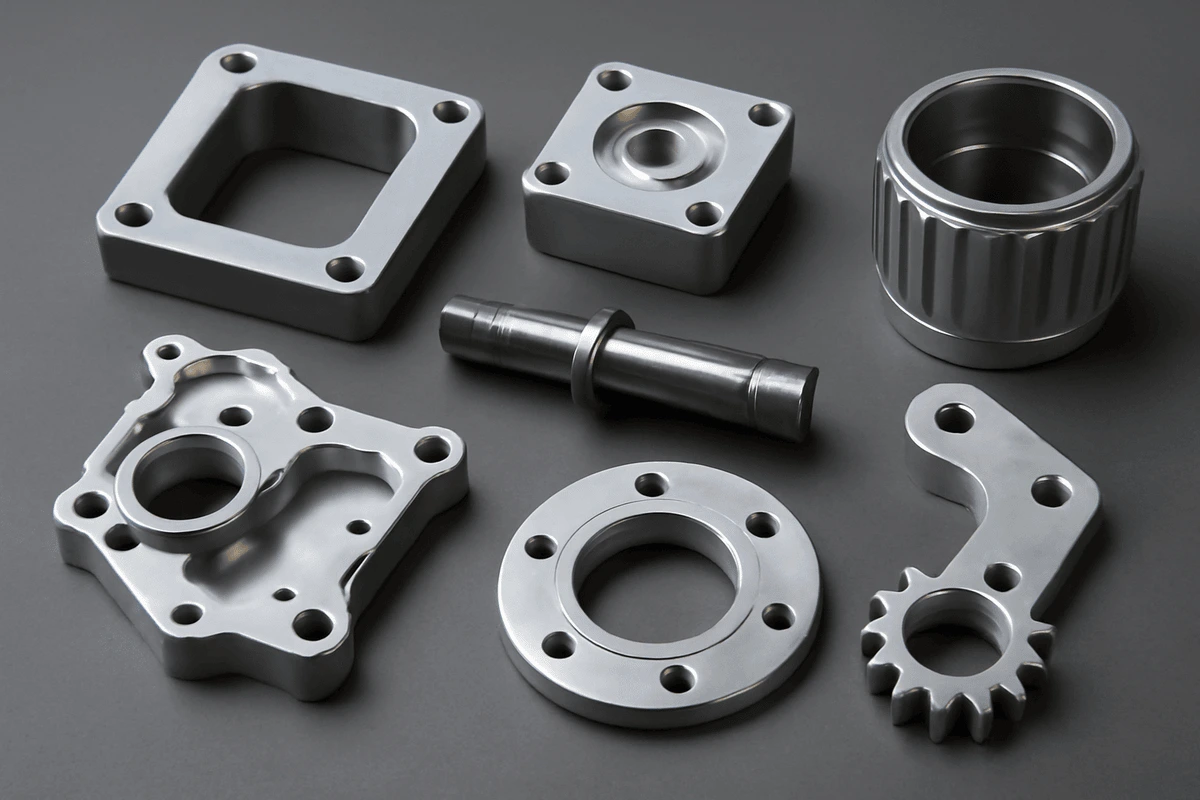
CNC machined components are precision parts made using computer-controlled machines. They are used in many industries like automotive, aerospace, electronics, and medical equipment, where accuracy and reliability are very important.
This guide explains how CNC machined components help improve product quality and performance. It covers design principles, materials, manufacturing processes, and practical uses — giving clear guidance on choosing the right parts and getting the best results in manufacturing.
2What is CNC Machining?
CNC (Computer Numerical Control) machining is a process where computers control machines to cut and shape materials like metal, plastic, wood, or foam. This subtractive manufacturing method removes material from a raw workpiece to create precise finished parts.
CNC machining is fast, accurate, and repeatable — used in cars, planes, electronics and industrial equipment where precision and consistency are non-negotiable.
3What Are CNC Machined Components?
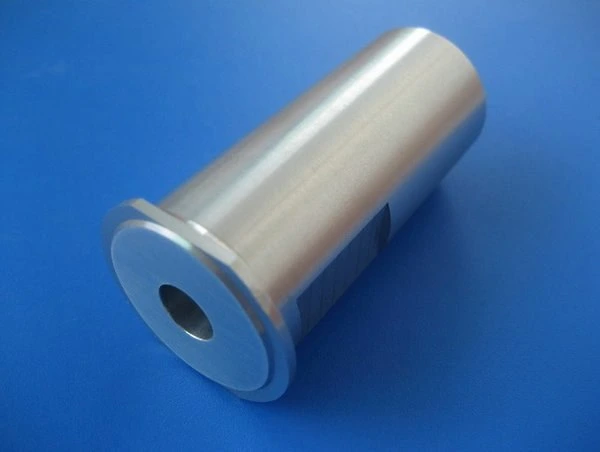
CNC machined components are parts made by computer-controlled machines that cut, shape, or drill materials into precise forms. They are highly accurate, consistent, and used in industries where precision matters — automotive, aerospace, electronics, and medical devices.
Manufacturers can produce CNC machined components from a wide range of materials: metals like aluminium, steel and brass; plastics like ABS and nylon; and advanced composites. This variety allows engineers to select materials based on strength, weight, durability, and specific part requirements.
Why CNC Machined Components Matter
CNC machined components are important because they combine precision with efficiency. By automating complex cutting and shaping processes, CNC machines reduce errors, save materials, and produce parts faster than traditional methods. Even small deviations in size or shape can affect performance, safety, and durability — making CNC machining essential for high-quality production.
4How Does CNC Machining Work?
CNC machining is a process where computer software controls machines to cut, drill, or shape materials into finished parts. The process is precise, repeatable and highly automated — starting from a 3D CAD model and ending with a finished component guided by a CNC program.
Design the Part (CAD)
A 3D model is created using Computer-Aided Design (CAD) software showing the part's dimensions, shape and features. Designing carefully ensures the part can be made efficiently on a CNC machine.
Create the CNC Program (CAM → G-code)
The CAD model is imported into CAM (Computer-Aided Manufacturing) software. The CAM software generates the CNC program in G-code (for machine movements) and M-code (for functions like spindle start/stop and tool changes).
Set Up the Machine
The CNC program is loaded into the machine's controller. The raw material (workpiece) is secured in place, and the required cutting tools are installed.
Execute the Program
CNC servo or stepper motors move the cutting tools or workpiece along X, Y, and Z axes. The machine automatically removes material layer by layer, following the program's instructions to produce a precise finished part.
Inspect and Finish
Calipers, micrometers or CMMs check dimensions against tolerances. Post-processing steps — deburring, anodising, powder coating — are applied as needed.
5Types of CNC Machined Components
CNC machined components can be grouped by their type, function, or material. They range from simple parts to complex assemblies, used widely across aerospace, medical, automotive, and consumer goods.
By Process
Milled and Turned Parts
- Made with CNC milling machines or lathes
- Examples: gears, housings, manifolds, shafts, bushings
- Most common CNC machined parts — suitable for both simple and complex shapes
Cut Parts
- Produced using laser cutting, plasma cutting, or wire EDM
- Used when precision cutting or complex flat shapes are needed
- Examples: intricate metal designs, sheet metal components
Drilled Parts
- Made with CNC drilling machines for small holes, deep holes, and precision spots
- Ensures accuracy for components requiring exact hole placement
By Category
Machine Components
- Controller (MCU): The brain — reads G-code and sends commands
- Drive System: Motors and actuators that move the machine axes
- Spindle and Tool Holder: Spins the cutting tool or holds the workpiece
- Bed and Table: Supports and positions the workpiece
- Feedback System: Monitors position, speed and movement for accuracy
Finished CNC Machined Products by Industry
- Aerospace: Airfoils, landing gear parts, electrical connectors
- Medical: Surgical instruments, implants
- Automotive: Engine parts, transmission components
- Consumer Goods: Electronic housings, appliance parts
6CNC Machine Diagram & Key Parts
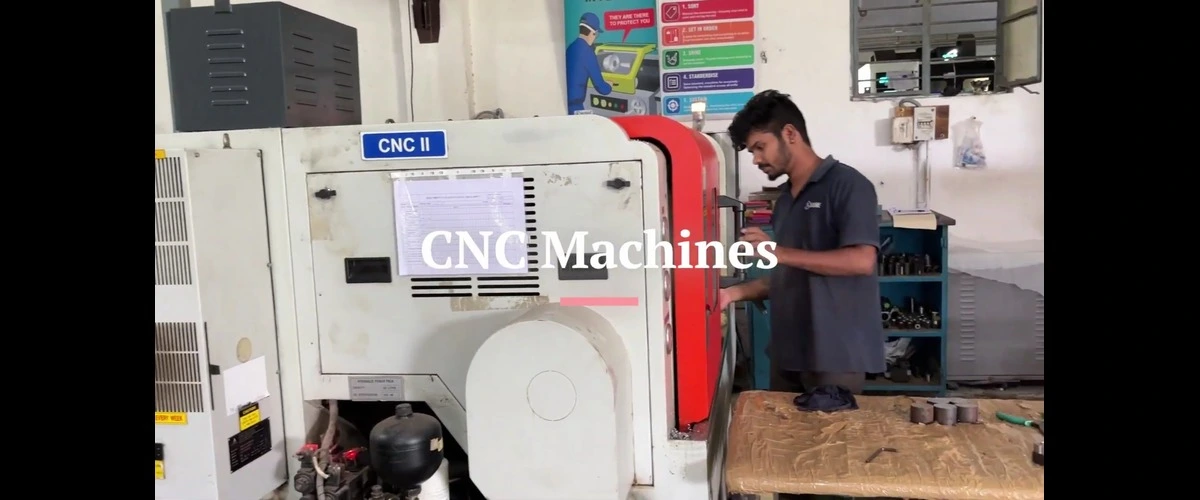
A CNC machine is a computer-controlled system that performs precise, automated machining operations. Its main components work together to shape, cut, or drill materials with high accuracy.
| Part Name | Description |
|---|---|
| Machine Control Unit (MCU) | The brain of the CNC machine. Reads G-code and sends exact commands to motors and components, controlling all motion and speed. |
| Input/Output Devices | Transfer data to/from the CNC machine — USB ports, network connections, or older methods like punched tape readers. |
| Control Panel / Display | The operator interface — enter commands, monitor machine status, view G-code and part settings. |
| Drive System | Servo motors and circuits that move the machine axes (X, Y, Z) and spindle — controlling speed, direction and position. |
| Feedback System | Encoders and sensors track real-time position and movement, sending data back to the MCU to correct any errors and ensure high precision. |
| Machine Bed / Base | The strong frame that supports all other parts — keeps the machine stable and absorbs vibrations during machining. |
| Spindle | Holds and rotates the cutting tool (in mills) or workpiece (in lathes). The spindle's accuracy directly affects final part quality. |
| Work Table / Chuck | Where the workpiece is mounted. The table moves along X and Y axes; the chuck holds round parts during CNC turning. |
| Tool Changer / Turret | Automatic tool changers (ATC) switch between tools automatically — saving time and improving production efficiency. |
| Auxiliary Systems | Cooling systems, lubrication units and chip conveyors remove heat, reduce friction and clear metal chips to keep the machine running smoothly. |
7Common Materials Used for CNC Machined Components
The choice of material depends on strength, weight, corrosion resistance, and machinability. CNC machined components can be made from metals, plastics, and composites.
Metals
- Aluminium (6061, 7075): Lightweight and strong with good machinability — 6061 for general use, 7075 for higher-strength applications
- Steel: Strong and hard — low-carbon steel for general parts, tool steel for high-wear applications
- Stainless Steel (303, 304, 316): Resistant to corrosion and strong — used in medical devices, marine applications and food processing equipment
- Brass: Durable, corrosion-resistant and easy to machine — often used for bushings, fittings and precision fasteners
- Copper: Excellent for heat exchangers and electrical components due to high conductivity
- Titanium: Strong, lightweight and corrosion-resistant — ideal for aerospace and medical components where weight matters
Plastics
- Delrin / Acetal (POM): Strong, stiff and easy to machine — excellent for precision gears and bushings
- ABS: Strong, impact-resistant and widely used for functional housings and enclosures
- Nylon (PA6/PA66): Durable and self-lubricating — often used for gears and high-wear components
- Polycarbonate (PC): Tough and highly impact-resistant — used for guards, lenses and clear enclosures
- PEEK: High-performance plastic for demanding applications — excellent mechanical and chemical resistance up to 250°C
Composites and Other Materials
- Carbon Fibre (CFRP) and Fiberglass: High strength-to-weight ratio — used in aerospace and high-performance industries
- Wood: Common for CNC routers — furniture, cabinetry and decorative items
- Foam: Used for prototypes, packaging and custom-fit inserts
8CNC Machined Components: Step-by-Step Manufacturing Process
CNC machining is a computer-controlled manufacturing process that shapes materials into precise parts. Each stage plays an important role in creating accurate, high-quality CNC machined components.
Step 1: Create a 3D CAD Model
Design the part using CAD software. The 3D model shows the part's size, shape, and tolerances. Engineers apply Design for Manufacturability (DFM) principles to ensure the part can be made efficiently and cost-effectively.
Step 2: Convert the CAD Model to G-Code
The CAD design is loaded into CAM software which creates toolpaths and converts the design into G-code — including tool movements, cutting speed and depth, feed rate, tool changes, and coolant settings.
Step 3: Prepare the CNC Machine and Workpiece
- Secure the raw material to the machine table or chuck
- Install cutting tools into the spindle or tool holder
- Set tool offsets and configure the cooling system
Step 4: Execute the Machining Operation
The MCU reads the G-code and automatically moves the tools to cut the material. Depending on the design, this may involve CNC milling (complex surfaces), CNC turning (round parts), or CNC drilling (precise holes).
Step 5: Inspection and Finishing
Calipers, micrometers, and CMMs check dimensions against tolerances. Common post-processing steps:
- Deburring: Remove sharp edges left by the cutting process
- Media blasting: For smooth, even surface texture
- Anodising: Corrosion-resistant coating for aluminium parts
- Powder coating: Durable, coloured surface protection for steel parts
| Step | Description |
|---|---|
| 1. Create CAD Model | Design the part using CAD software with full dimensions and tolerances. |
| 2. Convert to G-Code | Generate toolpaths and G-code in CAM software. |
| 3. Prepare the Machine | Set up tools, workpiece, and offsets. |
| 4. Machine the Part | Run the CNC program to remove material via milling, turning or drilling. |
| 5. Inspect & Finish | Check accuracy using CMM and apply required surface finishes. |
9CNC Machining Parts vs CNC Machined Components
The words "parts" and "components" are often used interchangeably, but there is a subtle distinction. A CNC machined part is typically a single, simple item. A CNC machined component is often a more complex unit made up of several parts that work together.
| Feature | CNC Parts | CNC Components |
|---|---|---|
| Scope | A single, individual item | An assembly of multiple parts functioning together |
| Complexity | Usually simpler — single piece of material | Often more complex — multi-functional assemblies |
| Production Process | Basic CNC operations — milling, turning, drilling | Additional steps: assembly, testing, quality inspection |
| Cost and Time | Lower cost, shorter production time | Higher cost, longer lead times due to engineering and assembly |
CNC Machined Components: Pump housings, engine manifolds, spindle assemblies, valve bodies.
10Key Advantages of CNC Machined Components
CNC machined components offer many benefits for modern manufacturing — providing high precision, speed, cost savings, and safety, while handling a wide range of materials and complex designs.
1. Precision and Accuracy
Computer-controlled cutting guides tools with extreme accuracy, creating parts with tight tolerances and perfect repeatability. Because the process is automated, human error is minimised — every component is consistent in quality and size even across large production runs.
2. Speed and Efficiency
Automation makes CNC machining much faster than manual manufacturing. Machines follow optimised tool paths, reducing downtime and increasing production speed. They can run continuously — even overnight — allowing "lights-out" manufacturing without direct supervision.
3. Cost Savings
- Less labour: Automated machines require fewer operators
- Less material waste: Optimised cutting paths make better use of raw materials
- Lower energy use: Efficient processes reduce power consumption
4. Automation and Flexibility
Once programmed, CNC machines run almost entirely on their own. Design changes are made by editing the digital CAD or CAM program — no need to rebuild or retool the machine. Ideal for custom parts, prototyping, and small-batch production.
5. Safety and Versatility
Because machining is automated, operators spend less time near moving tools — increasing workplace safety. CNC machines work with metals, plastics, wood and composites, producing complex shapes and intricate geometries that would be difficult or impossible to make manually.
11Industries That Rely on CNC Machined Components
CNC machined components are essential in sectors that require high precision, accuracy, and reliable quality. They support virtually every major manufacturing industry.
Major Industries
- Aerospace: Parts with extremely tight tolerances for aircraft and spacecraft — turbine blades, structural brackets, landing gear components
- Automotive: Engine components, chassis parts, transmission housings, brake components and drive axles
- Medical: Precise and safe components for surgical instruments, orthopaedic implants and diagnostic devices
- Electronics: Small, intricate components — connectors, housings, heat sinks and PCB mounting hardware
- Defence & Military: Durable, reliable parts for vehicles, weapons systems and communications equipment
Other Industries
- Construction: Parts for heavy machinery and large-scale infrastructure
- Renewable Energy: Wind turbine components, solar mounting hardware and energy storage system parts
- Marine & Shipbuilding: Engine parts, navigation systems and hull components
- Oil & Gas: Pipe fittings, drilling equipment and processing machinery components
- Consumer Goods: Sports equipment, custom jewellery and precision appliance parts
12CNC Machining vs Other Manufacturing Methods
CNC machining is a highly precise, automated manufacturing process ideal for producing complex, consistent parts. The right choice depends on design complexity, material, production volume, and budget.
| Method | Best For | Advantages | Limitations |
|---|---|---|---|
| CNC Machining | Medium to large runs of complex, precision parts | High precision, material versatility, consistency, multi-material support | Higher initial setup cost; less economical for very low volumes |
| 3D Printing | Prototypes and very low volume (1–10 units) | No tooling cost, complex internal geometries possible, fast turnaround | Lower precision and mechanical strength than CNC; limited materials |
| Injection Moulding | High-volume production of identical plastic parts (1000+) | Very low per-part cost at scale, fast cycle times | High mould cost; limited design flexibility; mostly plastics only |
13Quality and Precision Standards
CNC machined parts rely on strict tolerances, accurate measurements, and rigorous quality standards to ensure consistent performance in aerospace, medical, automotive and electronics applications.
Precision and Tolerances
- Standard Tolerances: CNC machining typically achieves ±0.005 inches (0.127 mm) for general applications
- Tight Tolerances: High-precision machining can reach ±0.0005 inches (0.0127 mm) or tighter — critical for aerospace and medical parts
- ISO 2768: Defines linear and angular tolerances helping manufacturers maintain consistent quality across batches
Key Quality Factors
- Material Properties: Metals, plastics and composites must meet engineering specifications for hardness, strength and durability
- Surface Finish: Smoothness and roughness affect functionality, wear resistance and aesthetics
- Dimensional Accuracy: Final dimensions must align precisely with CAD designs — advanced CT scans verify internal features
Ensuring Quality in CNC Production
- Machine and Tool Calibration: Regular calibration keeps CNC machines and tools at consistent precision
- Preventive Maintenance: Scheduled maintenance reduces downtime and maintains optimal accuracy
- ISO 9001 Compliance: Adherence to recognised quality management standards demonstrates commitment to reliable production
- Skilled Operators: Experienced technicians ensure proper programming, handling and finishing of components
14CNC Machined Components Specifications
When designing CNC machined components, key specifications include material, tolerances, surface finish, dimensions and part features.
| Specification | Details |
|---|---|
| Tolerances | Standard: ±0.1 mm; tight: ±0.01 mm or better. Depends on part complexity and material. |
| Milled Part Size | Up to ~400 × 250 × 150 mm (varies by machine) |
| Turned Part Size | Diameter up to 500 mm, length up to 1000 mm |
| Wall Thickness | Minimum 0.8 mm for metals; 1.5 mm for plastics |
| Thread Standards | ISO Metric, UNC, BSP, or custom specifications |
| Surface Finishes | Machined, polished, anodised, powder coated, galvanised, brushed |
| Design File Formats | SolidWorks, Pro/Engineer, AutoCAD (DXF, DWG), PDF |
| Quality Control | Often 100% inspection before delivery with full dimensional report |
15The Future of CNC Machined Components
The future of CNC machined components is being shaped by automation, AI, and Industry 4.0. New technologies are making CNC machining faster, more precise, and more sustainable.
- Increased Automation and Robotics: Robots and automated systems enable 24/7 operation with high precision — reducing manual work and human error while increasing production speed.
- AI and Machine Learning: AI analyses real-time data to optimise tool paths, speeds and feed rates automatically — reducing scrap and shortening production times.
- Industry 4.0 Integration: Connected CNC machines enable real-time monitoring, remote control, predictive analytics and smarter, more agile manufacturing.
- Hybrid Manufacturing (CNC + 3D Printing): 3D printing creates near-net shapes that CNC machines finish to high tolerance — enabling innovative, lighter designs especially in aerospace and medical sectors.
- Sustainability Focus: Energy-efficient machines, eco-friendly coolants and optimised tool paths minimise material waste and power consumption.
- Predictive Maintenance: Sensors and AI predict when machines need maintenance — reducing downtime and unexpected failures, and making complex operations easier.
16Conclusion
At Audhe Industries, we make high-quality CNC machined components for modern industries using advanced CNC machines, precise methods, and skilled workers. Each part is accurate, strong, and consistent — from simple turned bushings to complex multi-feature machined assemblies.
Our modern facilities and expert team manage projects of any size, whether it's a single prototype or high-volume production runs. From the automotive, aerospace, medical, electronics and industrial sectors — we deliver reliable performance, fast production, and cost-effective solutions.
?Frequently Asked Questions
What are machined components?
What items are CNC machined?
How does the precision of CNC machined components affect product performance?
What factors influence the lead time for CNC machined components?
Can CNC machined components be customised for low-volume production?
What role do CNC machined components play in reducing manufacturing waste?
Related Articles


